
Chi Ma's smart-border plan: what Vietnam shippers should do now
Vietnam has approved a 535-hectare master plan for Chi Ma through 2045. It creates a logistics direction, not an immediate clearance-capacity promise.
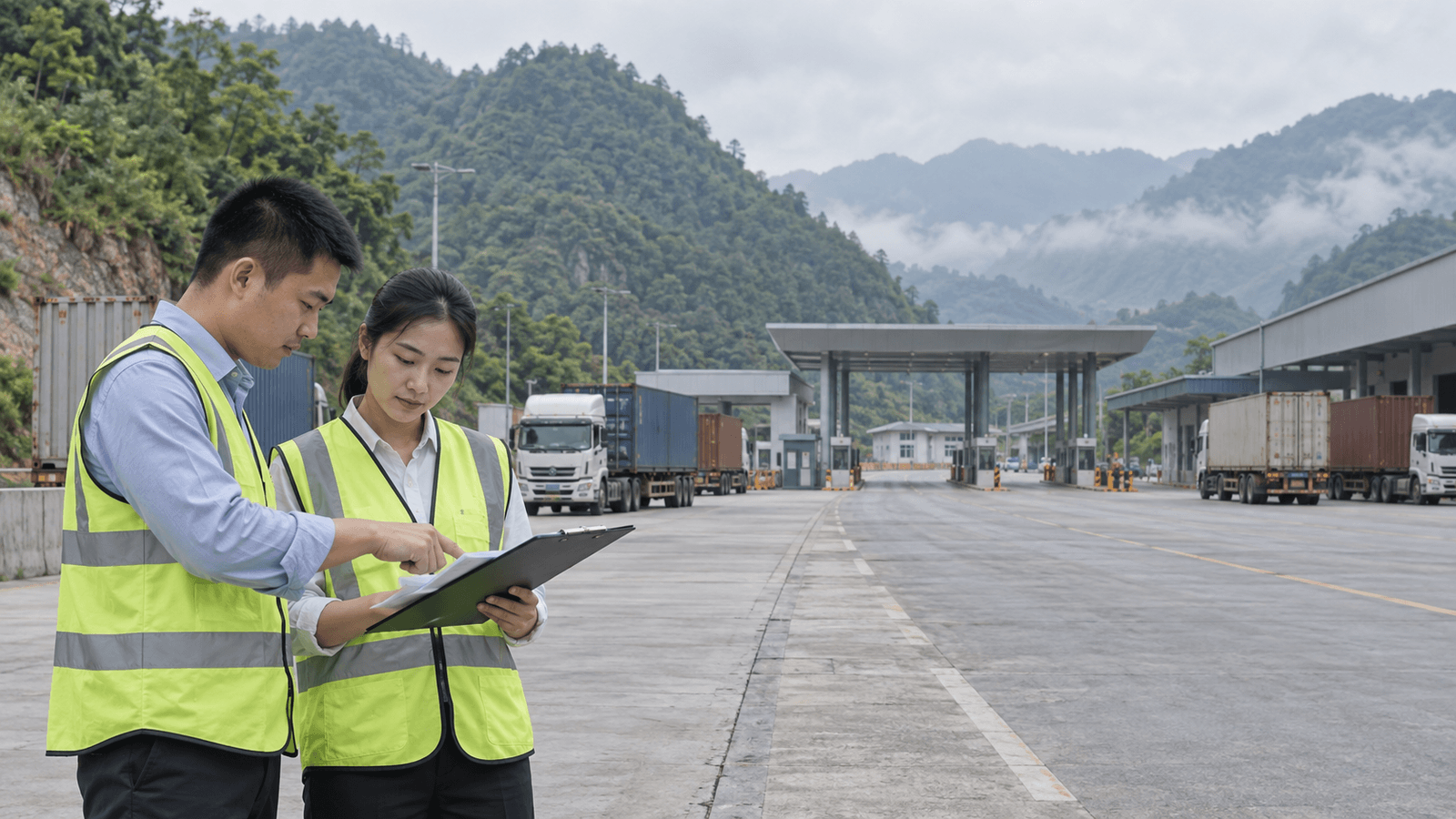
Vietnam has approved a long-term master plan for the Chi Ma border-gate area in Lang Son. Decision 1723/QD-TTg was issued on 4 September 2026 and plans the area through 2045. The official announcement describes a 535-hectare site, a 5.8-kilometre border frontage, two development corridors and three functional zones.
For freight teams, the useful news is the direction of travel: the plan provides for logistics centres, yards, bonded warehouses, distribution, hazardous-goods storage, repacking and transport-support services. It also calls for digital technology in cargo management, control and clearance.
The equally important fact is what the decision does not say. It does not announce that new facilities are commissioned, that customs procedures have changed, or that a new daily clearance capacity is available. A master plan is not a live booking instruction.
What is operating now
Lang Son's official report for 9 September said cross-border activity in the province was normal and without an unusual disruption. Across the province, 2,097 cargo vehicles were processed that day. Chi Ma accounted for 226 vehicles: 48 exports and 178 imports. The report described Chi Ma's flow as stable.
Those figures are a one-day operating snapshot, not a capacity benchmark or forecast. They should not be converted into a guaranteed truck slot, crossing time or queue expectation for another day.
Six practical checks for Vietnam–China cargo
### 1. Keep the current route decision separate from the 2045 plan
Use the carrier, broker, border authority and daily official status to route today's shipment. Do not divert cargo to Chi Ma solely because the master plan has been approved.
### 2. Verify whether the cargo can use the crossing
Confirm the commodity, customs regime, vehicle documents, quarantine or food-safety requirements and the corresponding Chinese-side arrangement before dispatch. A planned logistics function does not override current border rules.
### 3. Record the live operating window
Before the truck leaves the factory, confirm working hours, receiving cut-off, yard instructions and whether traffic regulation is active. Save the dated notice or written confirmation in the shipment file.
### 4. Map future facility needs precisely
If your business may use Chi Ma later, quantify the need for cold storage, bonded storage, hazardous-goods handling, repacking, inspection space and distribution. This turns the plan into a useful site-selection checklist without assuming those services already exist.
### 5. Apply an investment gate
For a warehouse, yard or service proposal, require proof of detailed zoning, land status, construction and environmental approvals, utilities, road access, operating licence and commissioning date. Master-plan inclusion alone is not project approval or service availability.
### 6. Define the trigger for changing the routing guide
Update internal standard operating procedures only after a named facility, clearance process or traffic arrangement becomes effective and is confirmed by the responsible authority. Until then, keep Chi Ma as a monitored option rather than an assumed upgrade.
Impact on Vietnam freight and import-export
The near-term impact is planning, not instant capacity. Exporters, importers, truckers, brokers and warehouse operators now have a clearer official framework for future facilities at Chi Ma. The practical response is to watch implementation milestones and improve route files, not promise faster clearance.
Confidence is high in the decision date, planning horizon, area, spatial structure and listed functions because they appear in official government sources. Confidence is high in the 9 September operating snapshot. Confidence is low for the timing, capacity and commercial availability of any future facility because the sources do not provide project-by-project commissioning schedules. No standard transit saving, queue reduction, freight rate or guaranteed capacity is claimed.
Turn this guidance into a shipment check
Use the relevant commercial route or Vietnam handling service below, then send the real shipment details for a current option. Rates, space and transit plans are checked against the live requirement.
Official and editorial sources
- Government of Vietnam, Decision 1723/QD-TTg official record, 4 September 2026
- Prime Minister of Vietnam, signed Decision 1723/QD-TTg, 4 September 2026
- Government News, Develop Chi Ma toward a smart, modern border gate, 5 September 2026
- Lang Son Department of Industry and Trade, border trade situation on 9 September 2026, 10 September 2026
Need an updated freight quote?
Send John your cargo details and preferred route. He will help check the best practical option.
Get a Freight Quote