
Red Sea routing is changing: 7 checks for Vietnam–Europe bookings
Updated for the 14 September Gemini announcement: four more services are moving to Suez, including AE11 calls at Valencia, Barcelona, La Spezia and Genoa.
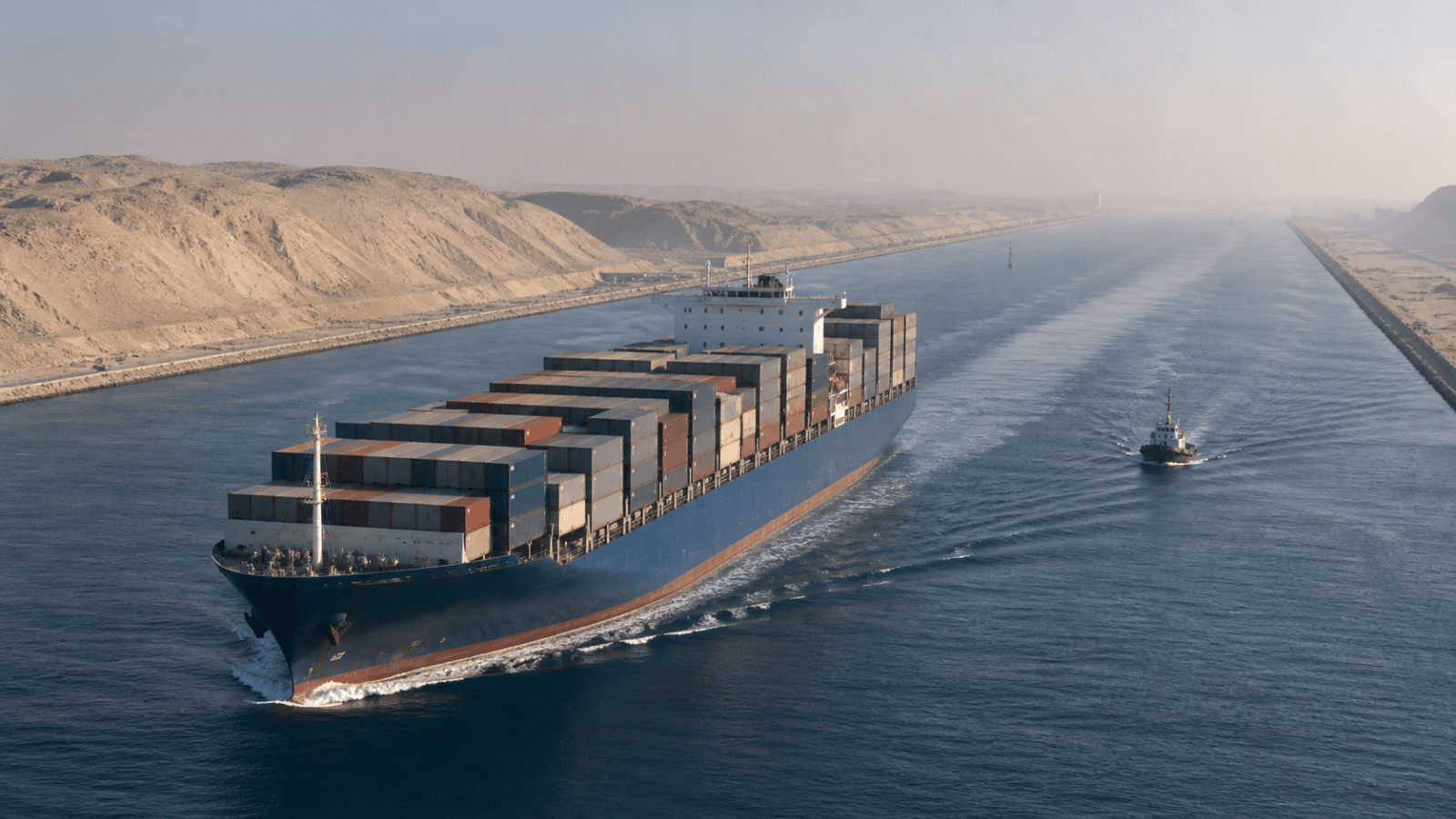
On 12 August 2026, the International Maritime Organization said the cargo ship TIHAMAH had been hit by a projectile off Al Mokha, Yemen, and that several seafarer fatalities had been confirmed. IMO called on shipowners and operators to assess risks before transit and follow appropriate best-management practices.
At almost the same time, an official Hapag-Lloyd notice said the Gemini Asia–South Europe SE4 service, operated with Maersk, was moving from the Cape of Good Hope route to the Red Sea route. The first westbound sailing named in that notice is Berlin Maersk. Maersk calls the paired service AE19; its original March launch notice described an Asia–Mediterranean/Jeddah rotation routed around the Cape.
These two facts do not prove that the Red Sea is closed, that every Asia–Europe service has returned through Suez, or that every Vietnam booking will be delayed. They show why the service and voyage now matter more than a generic carrier schedule.
16 September update: four more Gemini services move to Suez
Maersk announced on 14 September that AE5, AE11, AE12 and ME2 will structurally move from the Cape of Good Hope route to the trans-Suez corridor. They join AE15 and AE19, which were already using Suez routing. The carrier says the changes remain dependent on continued stability in the Red Sea area and the absence of escalation.
For Vietnam–Mediterranean cargo, AE11 is especially relevant to route planning because its announced rotation runs Shanghai – Yantian – Tanjung Pelepas – Suez Canal – Port Tangier – Valencia – Barcelona – La Spezia – Genoa – Vado Ligure – Suez Canal – Singapore. The first named westbound AE11 sailing is Antonia Maersk voyage 635W, departing Tanjung Pelepas on 19 September. AE5's first named westbound Suez sailing is Marchen Maersk 635W from Tanjung Pelepas on 21 September. Maersk says the first AE12 sailing will be communicated later.
A Vietnam shipment may connect to one of these mainline services through a feeder or Southeast Asian hub, but the public network announcement does not prove that a specific booking will use that connection. Exporters should verify the feeder, transshipment hub, mainline service, voyage and destination sequence on the live booking confirmation.
This update strengthens the case for checking service-level routing before promising transit time. It does not justify claiming a universal transit-time reduction, a guaranteed Suez route for every Vietnam–Europe shipment, or a fixed freight-rate effect.
What the August carrier snapshot said
Hapag-Lloyd's Week 33 operational update, last updated 12 August, recorded a specific SE4 adjustment: Seaspan Pride voyages 624W/633E would omit Jeddah, while Maersk Lebu voyages 631W/633E would cover a Port Said–Jeddah–Port Said loop.
The same update reported Jeddah yard density of up to 71%, with reefer capacity at 63%, and Salalah yard density of up to 78%, with berthing delays of up to 36 hours. Those figures are a dated carrier snapshot for named terminals and services. They are not a forecast for every port, carrier, or Vietnam–Europe shipment.
The key operational message is therefore mixed: more Gemini services are moving to the shorter Red Sea/Suez corridor, while security and operating conditions can still change after a booking is made.
Why this matters for Vietnam cargo
A mainline service does not need to call a Vietnamese port for a Vietnam shipment to use it. A booking can move by feeder from Vietnam to a Southeast Asian hub and then connect to the mainline service. Whether that happens depends on the actual booking confirmation and transport plan.
If the mainline voyage changes from the Cape to Suez—or changes again after booking—the impact may appear in the transshipment connection, estimated arrival, empty-container plan, delivery appointment, inventory buffer, cargo-insurance file, or charges allowed by the contract. The direction and size of the impact cannot be known from the public notice alone.
For urgent exports, the safer commercial promise is based on the confirmed voyage and current transport plan, not on an assumed “normal” Asia–Europe route.
Seven checks before cargo release
- Identify the mainline service and voyage in writing. Record the feeder leg from Vietnam, the transshipment hub, mainline vessel, discharge port and final delivery point.
- Ask whether the confirmed voyage is planned through the Red Sea/Suez Canal or around the Cape of Good Hope. Do not infer the route from the carrier name alone.
- Recheck the plan at booking confirmation, shipping-instruction cut-off, container gate-in and before promising the customer's delivery date.
- Compare the carrier's current ETA with the sales contract, documentary-credit window and buyer's receiving appointment. Use a documented buffer rather than an unverified fixed delay assumption.
- Ask the carrier or forwarder to itemise any security, contingency, amendment, cancellation, storage or rerouting charge that can apply, including the contractual trigger date. Do not treat a charge on another trade as universal.
- Send the planned route to the cargo insurer or broker and request written confirmation of any war-risk, geographic, notice or deviation conditions. This article does not interpret an insurance policy.
- Agree a contingency decision with the buyer: who approves a route change, who pays the resulting cost under the chosen Incoterm, and when air freight, split shipment or inventory substitution becomes worth considering.
Freight impact and confidence
For Vietnamese exporters and importers, the immediate risk is not a confirmed universal surcharge or a proven corridor-wide delay. It is planning against a route that may not match the named voyage. A route mismatch can leave production, documents, insurance and destination delivery working to different dates.
Confidence is high in the IMO incident statement and the named Maersk/Hapag-Lloyd service announcements. Confidence is medium for any individual Vietnam booking until the live booking confirmation, vessel schedule, transshipment plan, quote and insurance terms are checked. The security and operating situation can change after publication; verify again before cargo release.
Turn this guidance into a shipment check
Use the relevant commercial route or Vietnam handling service below, then send the real shipment details for a current option. Rates, space and transit plans are checked against the live requirement.
Official and editorial sources
- IMO statement on deadly ship attack in the Red Sea
- Hapag-Lloyd routing update for the SE4 service
- Hapag-Lloyd Week 33 Middle East operational update
- Maersk launch notice for the AE19 service
- IMO Red Sea information page
- Maersk, Structural changes to AE5, AE11, AE12 and ME2 Gemini services, 14 September 2026
Need an updated freight quote?
Send John your cargo details and preferred route. He will help check the best practical option.
Get a Freight Quote