
Vietnam-to-Taiwan shipments: the wood-packaging check before booking
A practical checklist for Vietnamese exporters and Taiwan importers using solid-wood pallets, crates, blocks or dunnage under Taiwan's current quarantine process.
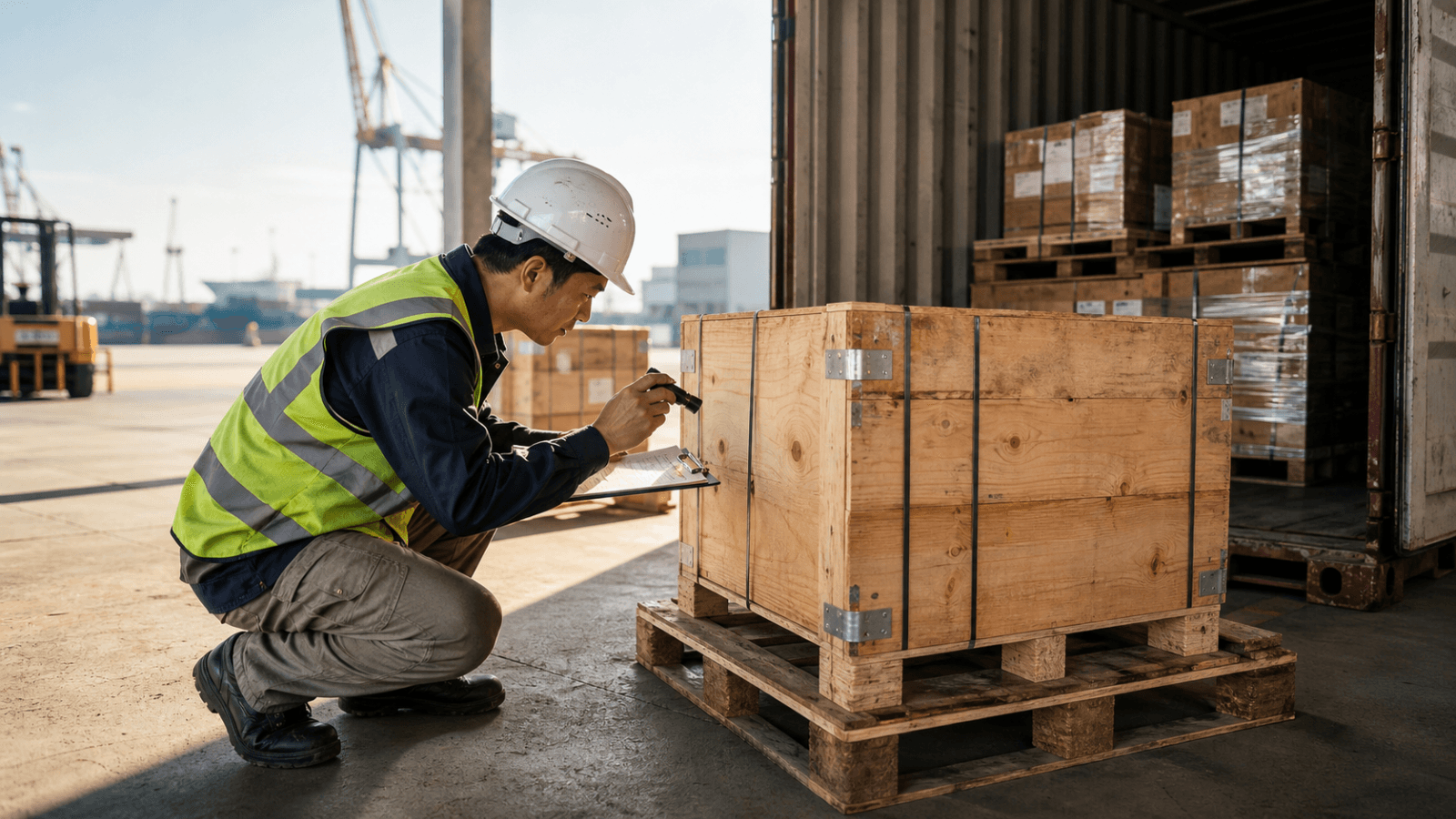
Taiwan reported USD 32.5 billion of two-way trade with Vietnam in 2025, including USD 14.3 billion of imports from Vietnam. For this busy lane, the pallet or wooden brace beneath a shipment can be as important to release planning as the invoice and bill of lading.
Taiwan's rules cover solid-wood packaging used to load, pack, support or secure cargo. A missing treatment mark or live pest evidence can hold the whole import declaration while the importer arranges treatment, destruction or re-export. The practical control point is therefore before packing and booking, not after arrival.
This guide addresses wood packaging only. It does not determine the tariff, product licence, plant-quarantine status or customs treatment of the goods themselves.
First decide whether the material is in scope
Taiwan's quarantine requirement lists cases, crates, skids, pallets, trays, frames, drums, wooden axles, cleats, dunnage, sleepers and packing blocks. Exporters should inspect every solid-wood component, including small wedges or bracing added by a warehouse after the main packing operation.
The published exemptions include wood no more than 6 mm thick; packaging made wholly from processed wood such as plywood, particle board, oriented strand board or veneer produced with glue, heat or pressure; painted or stained wood; material treated with tar or other preservatives; specified barrels and processed gift boxes; wood permanently attached to a freight vehicle or container; and packaging carrying goods kept below -17.8°C through arrival.
An exemption is material-specific. One plywood crate does not make an untreated solid-wood skid or added dunnage exempt. Record the construction of each component and ask the Taiwan importer or quarantine contact to confirm any borderline case.
What compliant solid-wood packaging needs
In-scope wood packaging must be treated before export under the supervision of the exporting country's plant-quarantine authority using a method recognised in ISPM 15. Taiwan's published methods include methyl bromide fumigation, conventional heat treatment, dielectric heating and sulphuryl fluoride treatment.
For conventional heat treatment, Taiwan states a minimum wood-core temperature of 56°C for at least 30 minutes. For dielectric heating, the whole wood profile, including the surface, must reach at least 60°C for one continuous minute. Treatment conditions differ by method, so exporters should not convert these figures into a do-it-yourself process.
After approved treatment, the wood must carry the ISPM 15 mark. The mark identifies the IPPC symbol, the two-letter country code, the authorised producer or treatment-provider number and the treatment code. For a Vietnamese source, the country element should be `VN`; the remaining number and treatment code must match the authorised provider and process.
Taiwan's official guidance says treated and correctly marked wood packaging does not also require an exporting-country phytosanitary certificate solely for that packaging. Commercial files may still include the treatment invoice or service record for traceability, but a private certificate does not cure a missing or invalid mark.
Repaired, reconstructed or remanufactured packaging must be retreated and correctly remarked. Before buying pallets, check the treatment provider and its ISPM 15 code against the current official list maintained by Vietnam's Plant Production and Protection Department.
What can happen at Taiwan inspection
For goods already subject to animal or plant quarantine declaration, Taiwan's inspectors examine the wood packaging with the goods. For other cargo, wood packaging may be checked at random together with Customs' physical inspection.
The operating procedure, last amended on 5 February 2025, treats packaging as non-compliant when the required mark is missing or when pests are found even though a mark is present. The quarantine authority then gives written notice to the importer or agent and asks Customs to suspend clearance of the whole declaration.
The importer may apply for quarantine treatment, destruction, or re-export together with the imported goods. Taiwan may require the goods and packaging to be re-exported together when local facilities cannot treat the packaging, or when the packaging cannot be separated and the importer does not agree to joint treatment. These are regulatory options, not a prediction that every marked pallet will be inspected or delayed.
Taiwan Customs says the duty payer must declare imported goods within 15 days following arrival of the conveyance. Advance declaration can begin after the carrier transmits the manifest and the required documents are ready. That makes early transmission of the invoice, packing list, bill of lading data and packaging evidence useful, even though it does not guarantee a particular clearance channel or release time.
Six checks before booking
- List every pallet, crate, skid, wedge, block and piece of dunnage, including wood added by consolidators or warehouses.
- Separate exempt processed material from in-scope solid wood; keep a material specification or supplier statement for claimed exemptions.
- Use a treatment provider shown in Vietnam's current official database and reconcile its name, `VN` number and treatment method with the mark.
- Photograph each mark while it is clean, legible and accessible; retain the treatment order and link the evidence to the packing list or pallet ID.
- Reject repaired units with conflicting, obscured or unverifiable marks; have them retreated and remarked by an authorised provider before loading.
- Send the Taiwan importer or broker the commercial file and packaging evidence before the carrier cut-off, and obtain written confirmation for any exemption or unusual packing design.
Freight impact and confidence
For Vietnam exporters, the main risk is not a universal carrier surcharge. It is a preventable destination hold affecting an entire declaration because one supporting wood component lacks a valid mark or shows pest evidence. That can create handling, treatment, destruction, storage or re-export exposure and disrupt the importer's delivery plan.
Confidence is high in the cited Taiwan requirements, the 2025 operating-procedure amendment, Customs' declaration window and the official 2025 trade figures. Confidence is medium for any individual shipment until the actual packaging, marks, cargo type, port and importer file are checked. Confirm live requirements with Taiwan APHIA, Customs and the importer before each booking.
Turn this guidance into a shipment check
Use the relevant commercial route or Vietnam handling service below, then send the real shipment details for a current option. Rates, space and transit plans are checked against the live requirement.
Official and editorial sources
- Taiwan APHIA quarantine requirements for wood packaging material
- Taiwan Ministry of Agriculture operating procedure for imported wood packaging
- Keelung Customs import cargo clearance guidance
- Vietnam Plant Production and Protection Department heat-treatment provider list
- Taiwan Ministry of Economic Affairs: Taiwan-Vietnam economic relations
- Taiwan APHIA note on phytosanitary certificates for treated wood packaging
Need an updated freight quote?
Send John your cargo details and preferred route. He will help check the best practical option.
Get a Freight Quote