
7 Common Mistakes That Delay Export Customs Clearance in Vietnam
Avoid preventable export delays by checking HS codes, invoices, packing lists, VGM deadlines, and local coordination before cargo moves.
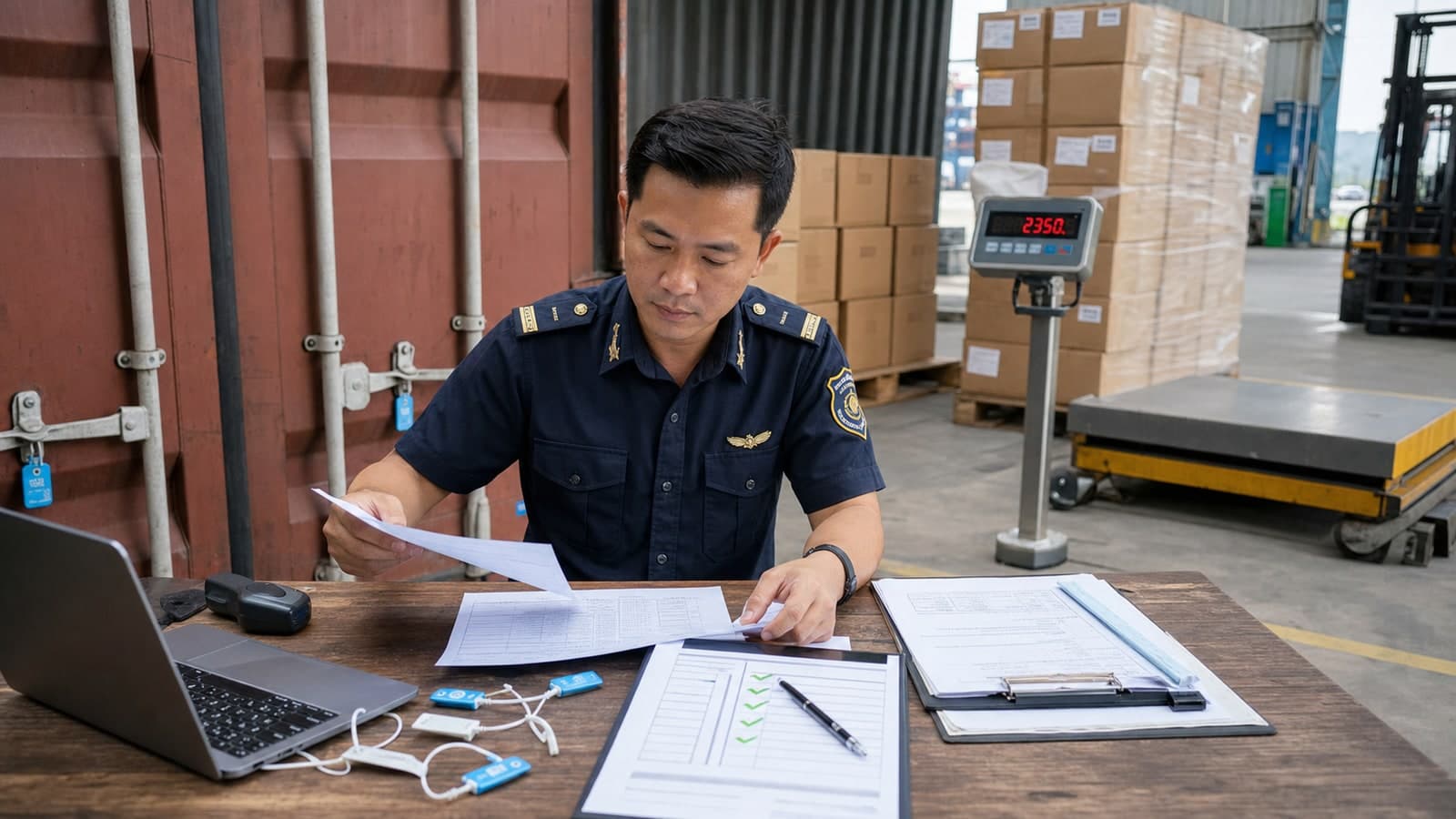
Export customs clearance is one of the most important stages of an international shipment from Vietnam. A small mismatch in the documents can lead to extra questions, declaration amendments, cargo inspections, storage charges, or a missed vessel.
For freight forwarders, overseas logistics agents, importers, and exporters, the best way to reduce risk is to prepare the shipment information early and make sure all parties are working with the same data.
Below are seven common mistakes that can delay export customs clearance in Vietnam.
1. Using an incorrect or insufficiently checked HS code
The HS code affects how the goods are declared and which policies may apply. A code selected only from a general product name may not accurately reflect the material, function, composition, or intended use of the cargo.
Before filing the declaration, confirm the product description with the shipper and check supporting documents such as catalogues, specifications, photos, and purchase records. For products that are difficult to classify, obtain professional customs advice before the cargo reaches the port.
2. Allowing the commercial invoice to conflict with other documents
The commercial invoice should be consistent with the contract, packing list, shipping instruction, and customs declaration.
Typical problems include different quantities, inconsistent product descriptions, incorrect currencies, missing Incoterms, or values that do not match the agreed transaction. Even a minor difference can create questions and require the shipper to revise documents.
A useful practice is to conduct one final document comparison before submitting the customs declaration.
3. Providing an inaccurate packing list
The packing list should show the actual number and type of packages, net weight, gross weight, dimensions, and cargo markings.
If the physical cargo does not match the packing list, the customs broker, warehouse, trucking provider, and carrier may all work with incorrect information. This can affect customs clearance, container planning, VGM, and bill of lading details.
The final packing list should be prepared only after the shipment has been packed and verified.
4. Submitting shipment information too late
Customs clearance is connected to other operational deadlines. The shipper may need time to correct the invoice, provide product information, obtain a permit, or clarify an HS code.
When documents are sent only a few hours before customs cut-off, there is little time to solve problems. Late shipping instructions can also affect bill of lading preparation and carrier documentation.
Freight forwarders should set an internal document deadline earlier than the carrier or terminal deadline.
5. Missing the VGM deadline or using the wrong container weight
For container shipments, the Verified Gross Mass must be submitted according to the carrier’s requirements and deadline. If VGM is missing or inaccurate, the container may not be accepted for loading.
The declared weight should be coordinated among the shipper, warehouse, trucking team, and carrier. Any last-minute cargo change should be reflected in the final weight information.
Do not assume that the booking weight, customs weight, and VGM are automatically the same.
6. Booking too close to the cargo-ready date
A late booking creates pressure on every stage of the shipment. Space or equipment may no longer be available, the selected sailing may close early, and the shipper may have insufficient time to prepare documents.
During peak periods, holiday weeks, or periods of schedule disruption, the risk becomes higher.
Whenever possible, share a cargo forecast and request booking options before the cargo is fully ready. Early planning makes it easier to compare carriers, transit times, cut-offs, and total logistics costs.
7. Failing to appoint a reliable local coordinator in Vietnam
Overseas agents often manage the customer relationship while a local partner handles the origin operations in Vietnam.
Without clear local coordination, the shipper, factory, customs broker, trucker, warehouse, and shipping line may receive different instructions. This can cause missed pickups, incorrect documents, late gate-in, or delayed responses when customs requests additional information.
A reliable local logistics partner should provide one clear point of contact and regular updates from booking confirmation to vessel departure.
A practical pre-clearance checklist
Before filing export customs, confirm the following:
- Shipper and consignee information
- Commodity description and HS code
- Commercial invoice and packing list
- Incoterm and declared value
- Package quantity, dimensions, and weights
- Required licenses, certificates, or inspection documents
- Booking number, port, vessel, and cut-off times
- Shipping instruction and VGM deadline
- Trucking and container pickup plan
- Contact person responsible for urgent corrections
How Booking by John can support your Vietnam shipment
Booking by John supports freight forwarders, overseas agents, importers, and exporters with practical origin coordination in Vietnam.
Services can include ocean freight booking, FCL and LCL solutions, export customs clearance, trucking, document coordination, and door-to-door logistics.
Review the complete Vietnam freight forwarding service or the focused customs clearance support in Vietnam before sending the shipment details.
Clear shipment information and early communication help reduce delays and keep cargo moving according to plan.
Need export logistics support from Vietnam?
Send your cargo details, route, ready date, and required service through the freight quote form.
Website: bookingbyjohnly.com | Email: BookingbyJohnly@gmail.com | WhatsApp/Zalo: +84 352 193 969
Turn this guidance into a shipment check
Use the relevant commercial route or Vietnam handling service below, then send the real shipment details for a current option. Rates, space and transit plans are checked against the live requirement.
Official and editorial sources
Need an updated freight quote?
Send John your cargo details and preferred route. He will help check the best practical option.
Get a Freight Quote