
Strait of Hormuz: recheck Vietnam–Gulf shipments before booking
New attacks and a July 16 carrier advisory keep Gulf cargo acceptance, routing and storage terms fluid.
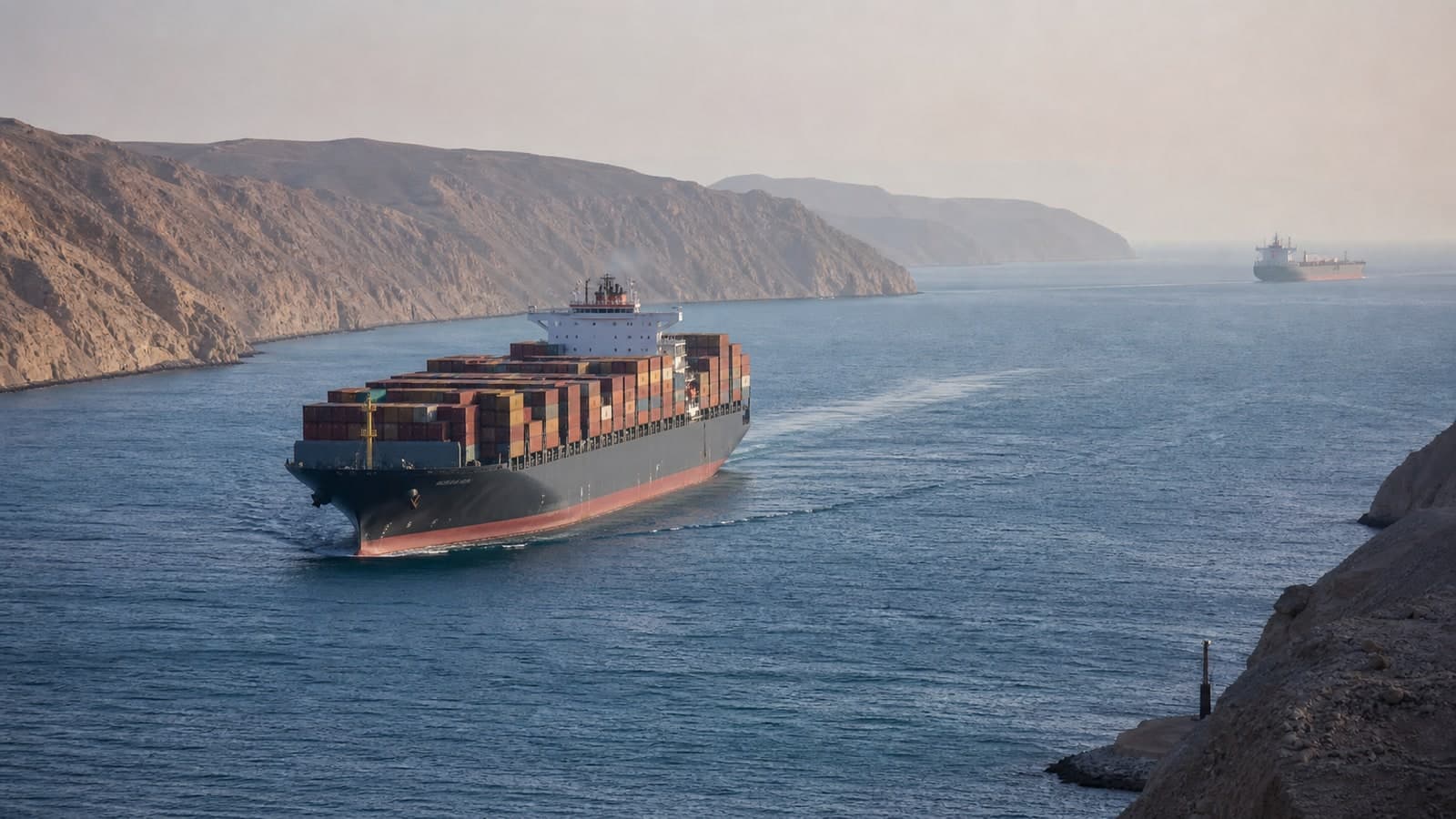
The Strait of Hormuz is not yet a “business as usual” corridor. On 8 July, the International Maritime Organization condemned attacks over the previous two days against several commercial ships. IMO said hundreds of ships and around 6,000 seafarers remained stranded in the Persian Gulf. Its live Middle East page was still describing the situation as rapidly evolving on 16 July.
For Vietnam importers and exporters moving cargo to or from Gulf markets, the immediate lesson is operational: do not rely on an old quotation, an earlier routing or a generic statement that the route has reopened. Reconfirm the exact carrier, load and discharge ports, transshipment point, cargo type, acceptance status, storage terms and insurance position before cargo handover.
Use the Vietnam freight forwarding service to submit the actual route and cargo details for a shipment-specific review. When delivery timing is critical, air freight to or from Vietnam can be compared separately, subject to current cargo acceptance and capacity.
What the latest carrier notice says
Maersk’s Middle East Operational Update 39, dated 16 July, lists different booking rules by cargo type and port. The notice says some dry-cargo bookings remain accepted through specified ports and landbridge arrangements, while other dry, reefer, dangerous-goods and out-of-gauge movements are suspended or restricted. Availability is therefore not a single yes-or-no answer for the whole Gulf.
For existing ocean cargo loading from or destined to specified ports in Iraq, Kuwait, Bahrain, Qatar, the United Arab Emirates, Oman except Salalah, and Saudi Arabia’s Dammam and Jubail, Maersk lists an Emergency Freight rate—subject to required regulatory approvals—of USD 1,800 for a 20-foot dry container, USD 3,000 for a 40-foot dry container and USD 3,800 for reefer, special or dangerous-goods equipment.
Under the carrier’s option to complete the planned voyage with temporary storage, that rate includes 14 days of storage in transit. Beyond that, the notice lists USD 25 per TEU per day, plus applicable reefer monitoring and plug-in charges. Maersk also says the rates may be adjusted as conditions change.
These are Maersk-specific advisory terms, not a market-wide tariff and not a quote for every Vietnam shipment. Another carrier, contract, cargo or port pair may have different acceptance and cost conditions.
Why this matters to Vietnam trade
Vietnam’s Ministry of Industry and Trade reported that imports reached USD 283.17 billion in the first half of 2026. Production inputs accounted for USD 266.4 billion, or 94.1% of imports. The ministry also reported import values of USD 5.87 billion for petroleum products, USD 4.69 billion for crude oil and USD 4.66 billion for coal during the period.
Those figures do not prove that every Vietnamese supply chain is exposed to Hormuz. They do show why routing, energy-cost and delivery uncertainty deserve close attention in an import-heavy production system. A Gulf disruption can affect a Vietnam business directly through a Gulf shipment, or indirectly through carrier network changes, fuel-sensitive transport costs and delayed inputs. The size and timing of any effect remain shipment-specific.
UN Trade and Development warned on 30 June that more than 100 days of disruption had created aftershocks that may outlast a reopening: freight contracts take time to reset and supply chains take time to adjust. The fresh July attacks and the July 16 carrier restrictions support a cautious, route-by-route approach.
Six checks before cargo handover
- Obtain written booking acceptance for the exact cargo type, ports and transshipment route.
- Ask whether the quote includes emergency freight, war-risk, fuel, storage, monitoring, plug-in and landbridge charges.
- Record the free-storage period and the daily charge after it expires.
- Confirm who may authorize a change of destination, return to origin or contingency-port delivery—and who pays.
- Recheck marine-cargo insurance and exclusions with the insurer or broker; a carrier notice is not an insurance confirmation.
- Put extra validity limits into customer quotations and add schedule margin for time-sensitive cargo.
Confidence and uncertainty
Confidence is high on the dated IMO, Maersk, UNCTAD and Vietnam ministry statements. Operational uncertainty remains high because carrier acceptance, port calls, charges, storage locations and security conditions can change at short notice. No general transit-time increase, market-wide surcharge or future reopening date is claimed here.
Booking by John can help turn the latest carrier notice into a shipment-specific route, charge and document check before cargo is committed. Request a freight quote with the origin, destination, cargo details, ready date and Incoterm.
Turn this guidance into a shipment check
Use the relevant commercial route or Vietnam handling service below, then send the real shipment details for a current option. Rates, space and transit plans are checked against the live requirement.
Official and editorial sources
Need an updated freight quote?
Send John your cargo details and preferred route. He will help check the best practical option.
Get a Freight Quote