
Vietnam passes USD 1 trillion in trade: six year-end freight checks
Vietnam’s ten-month goods trade reached USD 1.01055 trillion while November port conditions remained uneven. Here is a practical control list for year-end cargo.
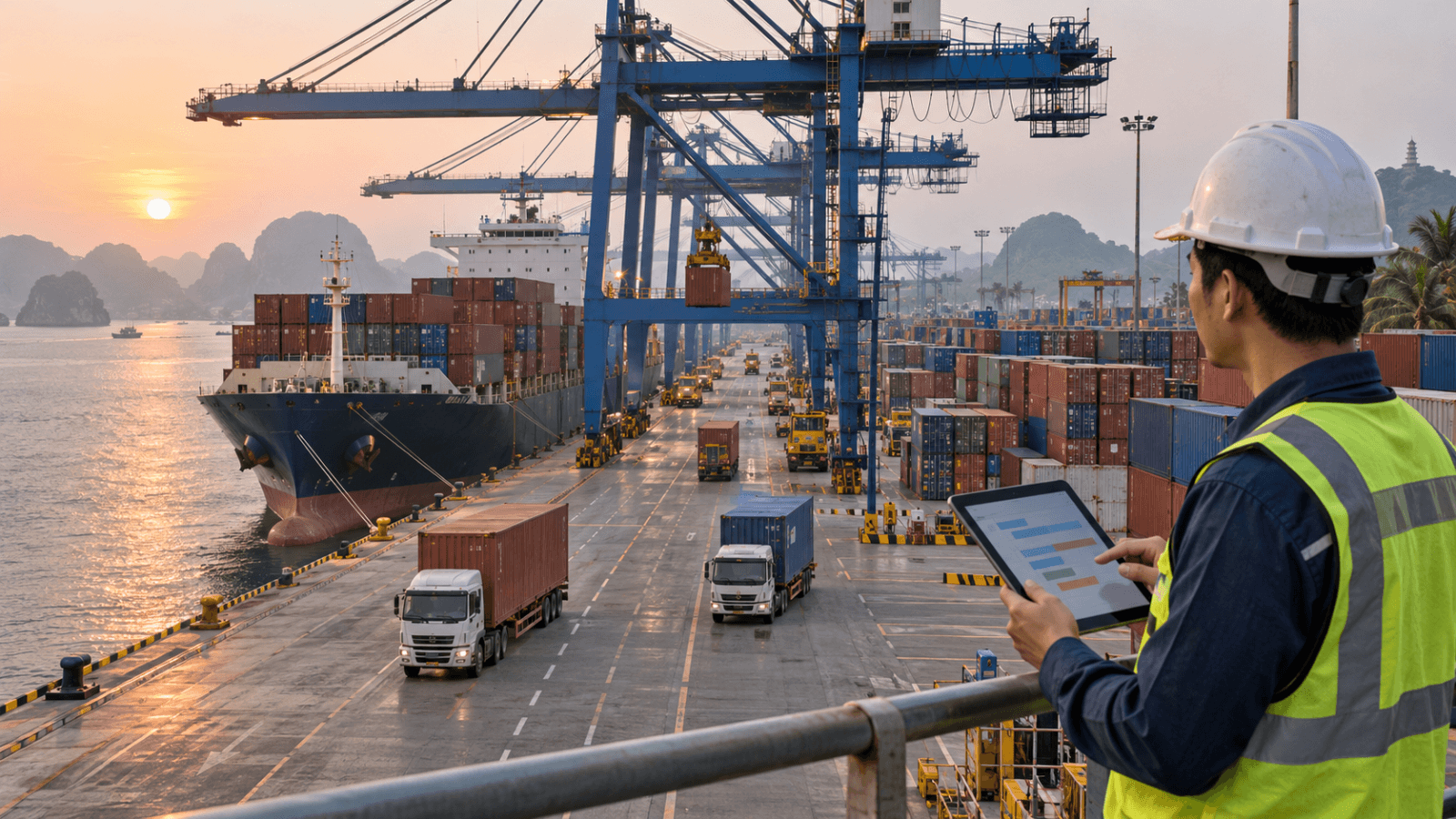
Vietnam has crossed a new goods-trade milestone just as year-end shipping plans are tightening. The National Statistics Office (NSO) reported preliminary total exports and imports of USD 1.01055 trillion for January–October 2026, up 32.3% year on year. Exports rose 27.5% and imports 37.4%.
The same official release recorded a USD 7.31 billion goods trade surplus in October, but a preliminary USD 12.07 billion deficit over the full ten months. It also said freight transport increased 15.5% in volume and 13.1% in turnover over the ten-month period. These figures show the scale and pace of activity; they do not mean that every trade lane, port or carrier is equally busy.
The operating picture is uneven. Maersk’s Asia Pacific update dated 6 November placed Ho Chi Minh in its 1–3 day vessel-waiting category, while Haiphong and Vung Tau were in the under-one-day category. The carrier said its indicators were dynamic and correct to the best of its information on the publication date. It also noted that Asia–Europe port coverage and routing changes were being implemented through November and advised customers to review sailing schedules, cut-offs and onward transport.
At the Vietnam Logistics Forum on 7 November, the Ministry of Industry and Trade said links between some production regions, seaports, border gates and distribution centres remained incomplete. That is the practical lesson behind the milestone: a large national trade value does not remove shipment-level bottlenecks between factory, terminal, vessel and final delivery.
Six controls for November and December cargo
### 1. Confirm the actual gateway and service string
Do not plan from “Vietnam port” alone. Record the booked terminal, first vessel, transshipment port and final service. The 6 November carrier snapshot differed between Ho Chi Minh, Haiphong and Vung Tau, and conditions can change after publication.
### 2. Re-check cut-offs against cargo-ready time
Put the latest documentation, VGM, customs, terminal and reefer plug-in cut-offs beside the supplier’s confirmed cargo-ready time. If a service or port call changes, obtain the revised cut-offs in writing and circulate one controlled version.
### 3. Protect the inland handover
Confirm truck or barge capacity, empty-container release, depot, terminal appointment and contingency owner. For cargo moving from inland production areas, include the factory-to-gateway leg in the shipment plan rather than treating it as a separate last-minute booking.
### 4. Test the transshipment connection
For indirect services, ask for the planned connection and the next recovery option. A short origin-port wait does not guarantee the full route. Schedule changes elsewhere in the regional network can still affect arrival and onward delivery.
### 5. Separate value signals from physical capacity
USD 1.01055 trillion is trade value, not TEU, tonnes, vessel capacity or available equipment. Use the national figure as a demand and planning signal, but use live quotations, confirmed bookings, equipment releases and terminal notices for shipment decisions.
### 6. Give the customer a dated status record
Record the source and time of every milestone: booking confirmation, empty release, cargo-ready confirmation, customs status, terminal gate-in, actual departure and revised ETA. Escalate changes against the customer’s latest required-delivery date, not against an old schedule screenshot.
Concrete impact for Vietnam importers and exporters
The immediate risk is coordination failure, not a single nationwide congestion number. Strong trade growth can concentrate demand for trucking, equipment, terminal slots and documentation teams, while the carrier snapshot shows different operating conditions across gateways. A shipper that keeps using an undated port assumption may choose the wrong buffer or miss a changed cut-off.
For each year-end shipment, add four fields to the control sheet: `gateway and terminal`, `schedule checked at`, `all cut-offs confirmed`, and `inland/transshipment recovery owner`. Revalidate them at booking confirmation and again before empty-container pickup or cargo handover.
Confidence is high in the NSO figures and publication date because they come from Vietnam’s official statistical authority. Confidence is high in what Maersk reported about its own 6 November snapshot, but the waiting-time categories are dynamic and are not port-authority guarantees. Confidence is high that the Ministry’s forum report identifies real regional connectivity gaps; the six-control workflow is editorial guidance, and no official source quantifies the delay or cost it will prevent. No source used here guarantees space, equipment, cut-offs, transit time, customs release or final delivery for an individual shipment.
Turn this guidance into a shipment check
Use the relevant commercial route or Vietnam handling service below, then send the real shipment details for a current option. Rates, space and transit plans are checked against the live requirement.
Official and editorial sources
Need an updated freight quote?
Send John your cargo details and preferred route. He will help check the best practical option.
Get a Freight Quote