
Vietnam Circular 128/2026: prepare smart-border cargo before 15 October
A new Finance Ministry circular sets customs controls for approved Vietnam-China smart-border areas from 15 October 2026. Here are six file and handoff checks.
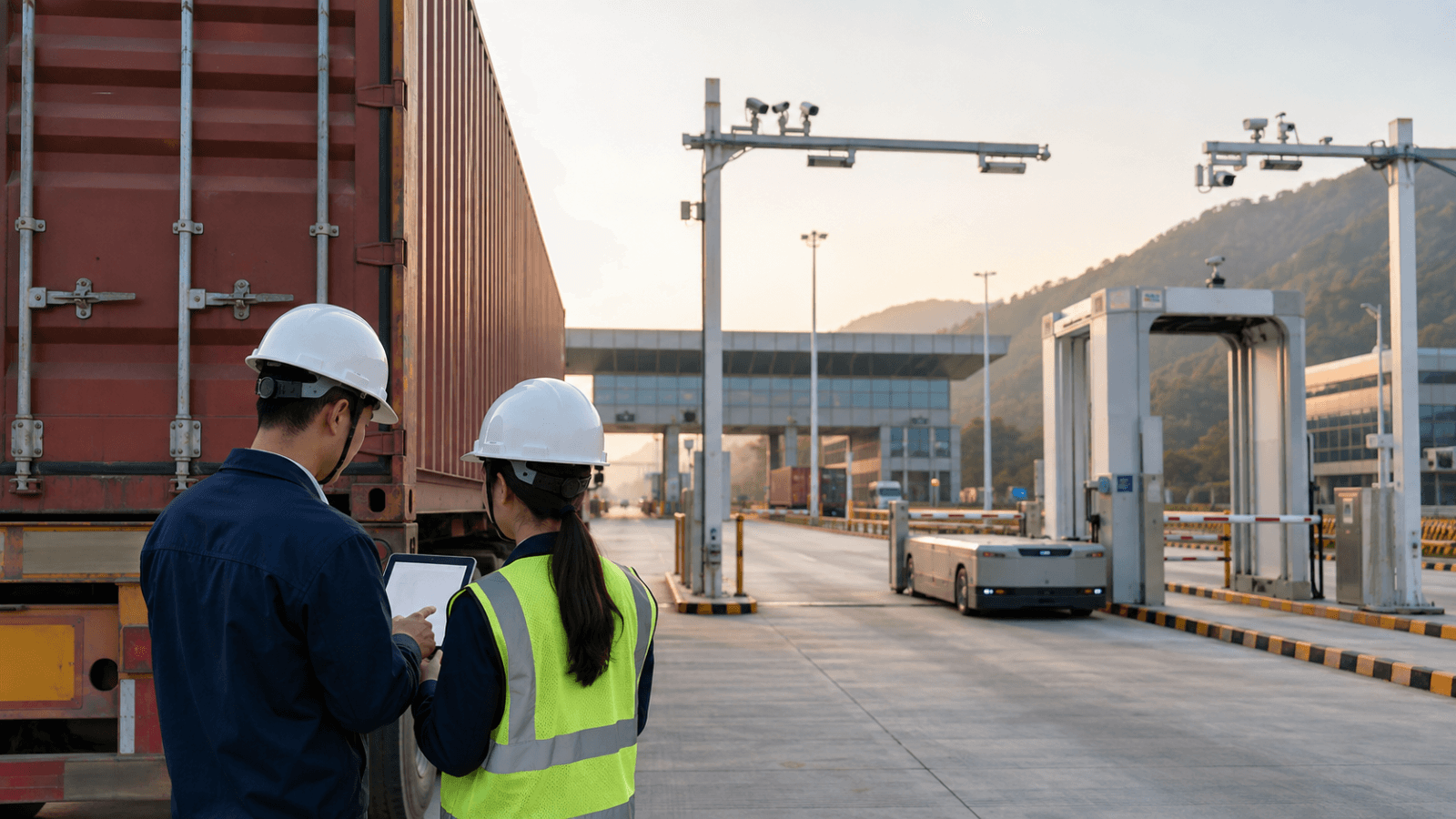
Vietnam's Ministry of Finance issued Circular 128/2026/TT-BTC on 27 August 2026. It takes effect on 15 October 2026. The issue date and effective date are different, so this is a preparation window rather than a rule already in force on 8 September.
The circular governs customs inspection, supervision and management for exported, imported and transit goods, and for vehicles operating inside a smart-border area approved by the Prime Minister. That scope matters: it is not a blanket rule for every land border gate or every Vietnam-China road shipment.
What the new framework covers
A covered smart-border area has a defined geographic boundary within a land-border gate. Its equipment includes cameras that identify unmanned smart vehicles, electronic entry and exit barriers, surveillance cameras, electronic scales and a system for goods entering or leaving the area. These systems must connect directly to the customs electronic data-processing system.
The regulated space may include export and import staging areas, physical-inspection and container-scanner zones, an operations centre, automated container-handling areas, unmanned smart-vehicle routes and other lawful functions.
Vietnamese export goods, or third-country goods transiting Vietnam, must have completed the relevant customs formalities before they are staged for loading onto an unmanned smart vehicle for actual export to China. Goods imported from China may be brought into the smart-border area by an unmanned smart vehicle and held pending import formalities or onward transit. Empty containers are also within the framework.
An unmanned smart vehicle does not complete the vehicle entry or exit customs procedure, but it remains subject to customs inspection, supervision and control. This exception for the vehicle does not exempt the cargo from its own declaration, inspection or release requirements.
Data, storage and cargo changes
Customs may analyse import risk using pre-arrival cargo data received from the smart-border operator or China Customs. Freight files therefore need consistent descriptions and identifiers before the physical handoff, even though the circular does not itself promise release based only on advance data.
Imported goods may be stored in the smart-border area for 30 days from arrival at the border gate. If the owner comes to complete customs formalities after that period, the case is handled as a violation under applicable law. The 30 days are a regulatory storage ceiling in this setting, not a promise of 30 free commercial storage days.
If a declarant requests a change of carrying equipment or repacking while goods are stored, Customs and the operator must be notified so the operation can be supervised and the system updated. Splitting or consolidating goods with other cargo must take place at a less-than-container-load collection point recognised by Vietnam Customs.
Working hours are set under the agreement between the Vietnamese border province managing the smart-border area and the Chinese side. The circular does not establish universal 24/7 operation.
Six readiness checks before 15 October
- Confirm that the planned gate and operating zone are within a smart-border area approved by the Prime Minister; do not infer coverage from the use of cameras or automation alone.
- Map who sends each pre-arrival field: exporter, importer, customs broker, forwarder, operator or the corresponding customs authority. Reconcile description, quantity, package count, weight, container or equipment ID, seal and declaration references.
- For exports and transit cargo, place the customs-completion milestone before smart-area staging and assignment to an unmanned vehicle.
- For imports, record the official border-arrival date, the customs owner and an internal escalation date well before the 30-day ceiling. Keep commercial storage and free-time terms separate.
- Require written approval and notification steps before changing equipment, opening, repacking, splitting or consolidating cargo; confirm that any consolidation point is recognised by Customs.
- Obtain the current operating hours and the live system-incident fallback from the operator and border Customs for the actual shipment; keep named contacts and manual handoff evidence.
Vietnam freight and import-export impact
The immediate impact is on data quality and the sequence of the border handoff. Export cargo that reaches staging before customs completion, an import file that cannot be matched to advance data, or an unrecorded repacking request can interrupt the planned transfer between conventional equipment and the smart-border lane.
The framework may support more automated supervision and earlier risk analysis, but the official sources do not guarantee faster clearance, a fixed border-transit time, lower cost or uninterrupted system availability. They also do not publish a universal fee, surcharge, storage tariff or penalty amount for an individual shipment.
Confidence is high on the instrument number, issue and effective dates, defined scope, equipment connections, cargo categories, unmanned-vehicle treatment, pre-arrival risk analysis, 30-day rule and notification requirements because they are stated in the official record and Government summary of the signed circular. Confidence is medium for shipment-level effects until the approved gate, local operating agreement, operator process, cargo status and customs instructions are confirmed. This article is operational guidance, not a customs classification or release decision.
Turn this guidance into a shipment check
Use the relevant commercial route or Vietnam handling service below, then send the real shipment details for a current option. Rates, space and transit plans are checked against the live requirement.
Official and editorial sources
Need an updated freight quote?
Send John your cargo details and preferred route. He will help check the best practical option.
Get a Freight Quote