
Panama Canal surcharges are changing: what Vietnam–U.S. shippers must check
A 15 August Panama Canal draft cut and carrier-specific surcharges make the route, trigger date and charge basis essential checks for Vietnam cargo moving to the U.S. East and Gulf coasts.
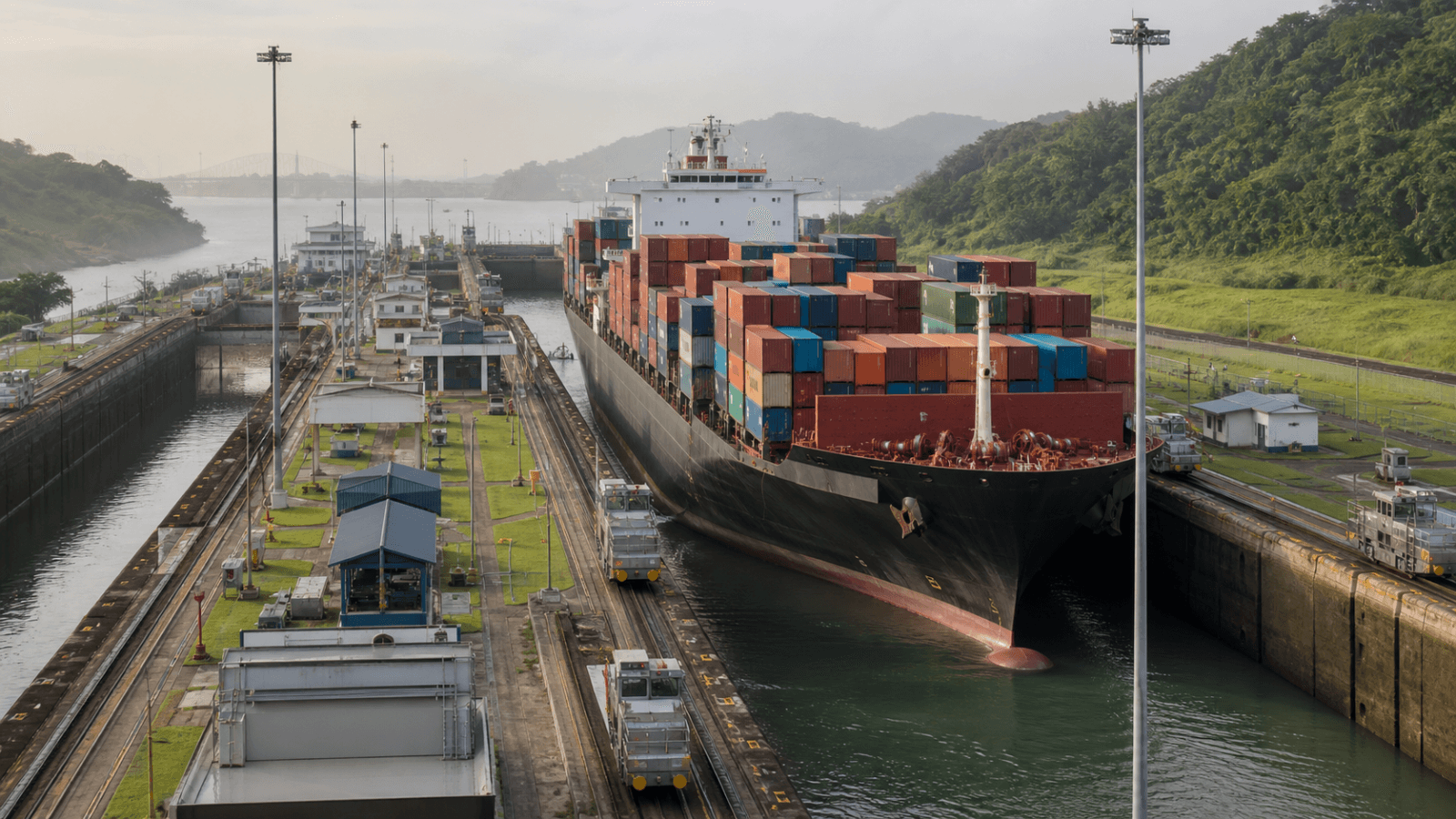
Vietnam exporters with cargo routed to the U.S. East or Gulf Coast through Panama should review open quotations and August bookings now. The Panama Canal Authority will reduce the maximum authorized draft at the Neopanamax Locks from 14.94 metres to 14.78 metres Tropical Fresh Water on 15 August 2026. Several carriers have separately announced Panama Canal surcharges, but their amounts, geographic scope and trigger dates are not the same.
This matters commercially because the United States was Vietnam's largest export market in the first half of 2026, with USD 86.5 billion of exports according to Vietnam's Ministry of Industry and Trade. It does not mean every Vietnam–U.S. shipment will pay a new charge. Cargo routed to the West Coast, cargo that does not transit Panama, and bookings governed by different contracts or tariff rules may be treated differently.
What the official notices say
- CMA CGM announced USD 320 per TEU for all cargo from the Far East via the Panama Canal to the U.S. East Coast and U.S. Gulf, applicable from 25 July 2026.
- Hapag-Lloyd announced USD 130 per TEU for all equipment on Far East–North America sailings via the canal commencing on 15 August 2026, until further notice.
- MSC announced USD 100 per TEU for all cargo from Southeast Asia, China, Korea and Japan to the U.S. East and Gulf coasts, based on gate-in from 19 August 2026, until further notice.
These notices are evidence of carrier-specific pricing, not a single compulsory public charge billed uniformly to every container. A headline comparison is therefore insufficient: one notice uses an applicability date, another the sailing commencement date, and another the gate-in date. Contract rates, service contracts, routing, equipment and later amendments may also change the final invoice.
Why the canal is tightening draft
Panama Canal Advisory A-22-2026, issued on 1 July, set the Neopanamax maximum draft at 14.94 metres from 24 July and 14.78 metres from 15 August. The Authority described the measure as part of its water-management strategy under current and projected Gatun Lake conditions and the possible development of El Niño.
The Authority's 22 July update said the canal had averaged 35 daily transits through 30 June and that no draft restriction had been needed for nearly two years. It also reported that its estimate of the probability of a severe El Niño event had risen from 25% in April to 81% in July. The Administrator said capacity restrictions were likely to include draft limits and potentially fewer daily booking slots, but that timing and scope would depend on market conditions.
That is an explicit uncertainty, not a confirmed schedule reduction. Shippers should monitor official notices and carrier updates instead of assuming that current transit capacity or today's surcharge will remain unchanged.
Five checks before confirming the booking
- Ask the carrier or forwarder to identify the actual ocean route and confirm in writing whether the service transits Panama.
- Request the charge code, amount, currency, basis and trigger event for the exact booking: quotation date, gate-in date, first vessel sailing or another contractual milestone.
- Reconcile the quotation with the booking confirmation and applicable service contract or tariff. Do not transfer a surcharge from one carrier's notice to another carrier's invoice.
- Confirm who bears the new amount under the sales contract and Incoterms rule, and update the landed-cost estimate before cargo is stuffed.
- Recheck the carrier notice and sailing schedule close to gate-in. Save the version used with the shipment file in case the route, date or charge changes.
Practical impact for Vietnam freight
The immediate impact is cost and quotation uncertainty on selected all-water services to the U.S. East and Gulf coasts, not a blanket change to all U.S.-bound freight. Exporters comparing an all-water Panama service with a U.S. West Coast routing plus inland transport should compare the complete door-to-door cost, transit time, capacity and cargo requirements. The three published surcharge levels are not enough to decide the best route by themselves.
Confidence is high for the canal draft dates and the quoted carrier notices because each comes from the relevant authority or carrier. Confidence is medium on future capacity and total shipment cost: the Canal Authority says timing and scope depend on conditions, and each booking remains subject to its own route, tariff and contract. This update is operational guidance, not a guaranteed rate or transit-time forecast.
Turn this guidance into a shipment check
Use the relevant commercial route or Vietnam handling service below, then send the real shipment details for a current option. Rates, space and transit plans are checked against the live requirement.
Official and editorial sources
Need an updated freight quote?
Send John your cargo details and preferred route. He will help check the best practical option.
Get a Freight Quote